We combine cryo-EM, in vitro biochemistry and cell biology to reveal how molecular machines are built and controlled — in cell division, in signalling across membranes, and in disease-related protein assembly.

Our central interest is how cells divide faithfully. We study the molecular machines that drive and police the cell cycle — including separase, the protease that triggers chromosome segregation, the CDK/cyclin complexes that set cell-cycle timing, and the APC/C ubiquitin ligase that controls mitotic exit.
Using cryo-EM together with reconstituted biochemistry, we have described how separase is held inactive by securin and Cdk1–cyclin B1, and how it recognises and cleaves its cohesin substrate at atomic resolution — work that may guide separase inhibitors as future anti-cancer drugs.
We apply the same structural approach to membrane proteins — in particular G-protein-coupled receptors, among the most important drug targets in medicine. We determined how a nanobody antagonist targets the μ-opioid receptor, and are extending this work to further signalling receptors.
This line of research is growing: an SNSF Swiss Postdoctoral Fellowship now supports structural studies of GPCRs in the group.

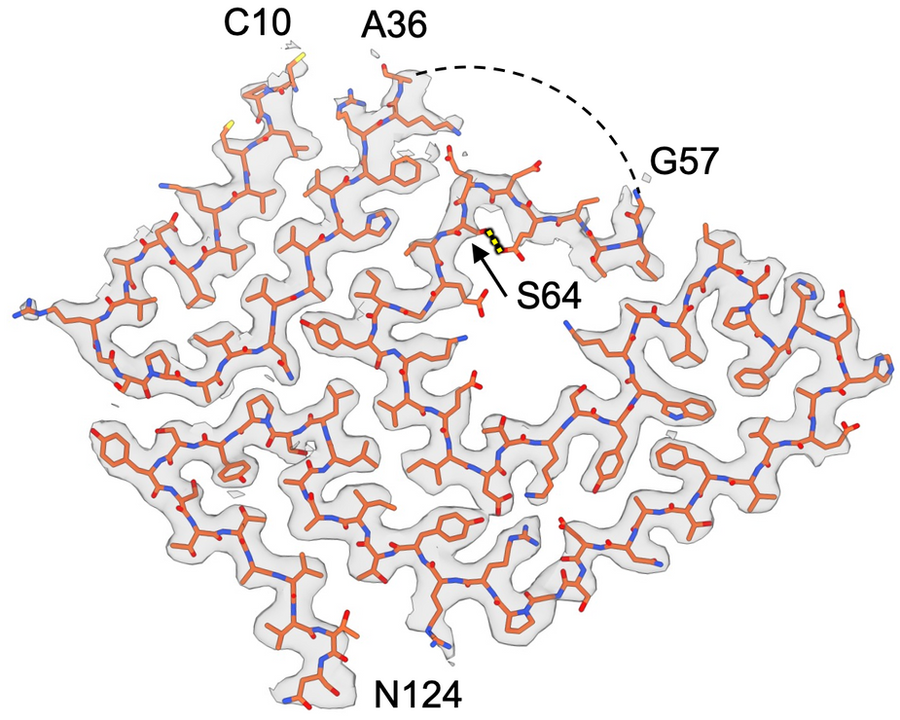
Amyloid fibrils underlie a range of human diseases. We determined the first-ever cryo-EM structure of ATTR amyloid filaments from a living patient, using tissue from a minimally invasive skin biopsy.
Because skin biopsies can be repeated over time, this opens the door to studying how fibril composition and structure evolve across disease stages and in response to treatment — with clear diagnostic potential. Work carried out with collaborators in Bellinzona.
